+00 000 000 000 Book
Book a visit

Treatments by body part

We treat six groups of problems. Choose a joint on the figures to see the treatments that cover it, or scroll through all six. Every treatment starts with a 45 minute first visit.

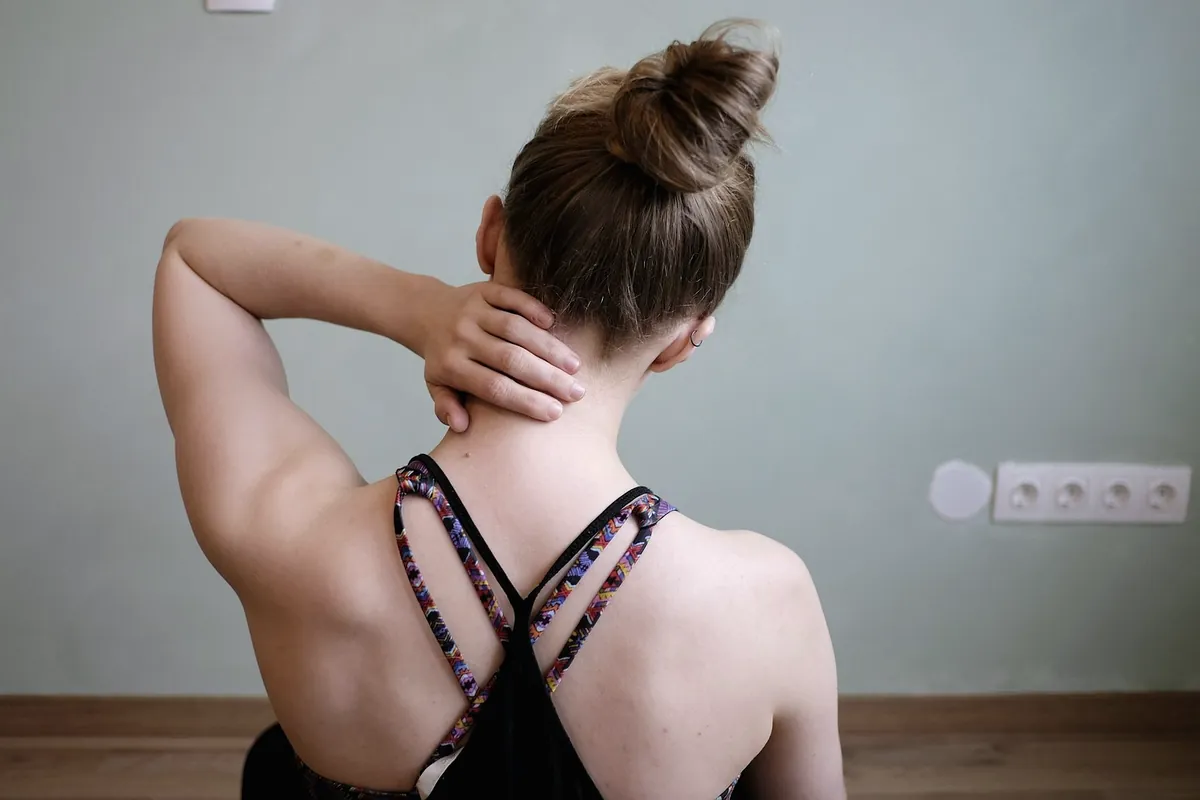
A woman seen from behind, holding the back of her neck with one hand

Neck side bend, typical range 0° to 45°

01

Back and neck pain

Stiff necks, low back pain, sciatica and headaches that start in the neck.

Who it helps
People with lower back pain, a stiff or sore neck, sciatica, headaches that start in the neck, and aches from desk work or lifting.
What happens
We find the movements and positions that change your pain. Treatment is hands-on work, specific exercise and a short routine to do at home. You leave the first visit knowing what to do and what to avoid.
What we measure
How far you can bend and turn your neck and back, and how long you can sit or stand before the pain starts.
Usual course
3 to 6 sessions over 4 to 8 weeks
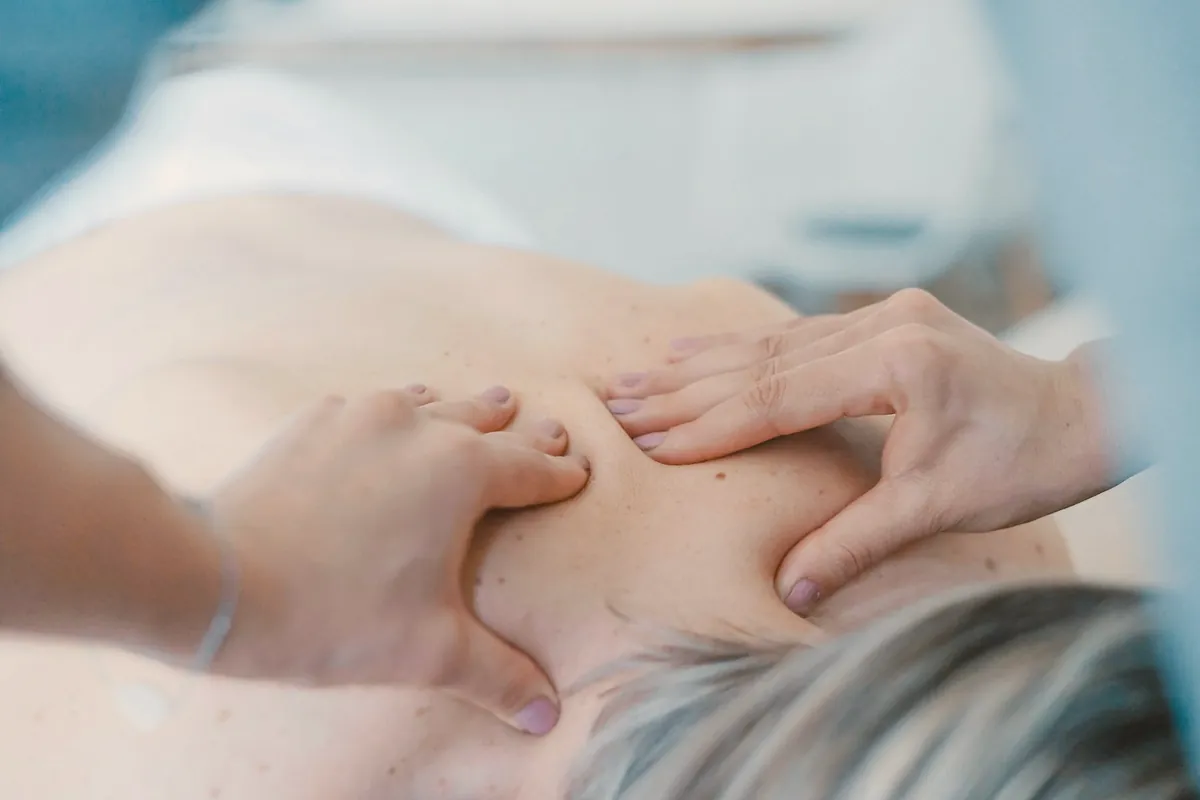
A physiotherapist's hands working on the muscles between a woman's neck and shoulder blade
Hands-on work around the neck and shoulder blade.

Book a first visit

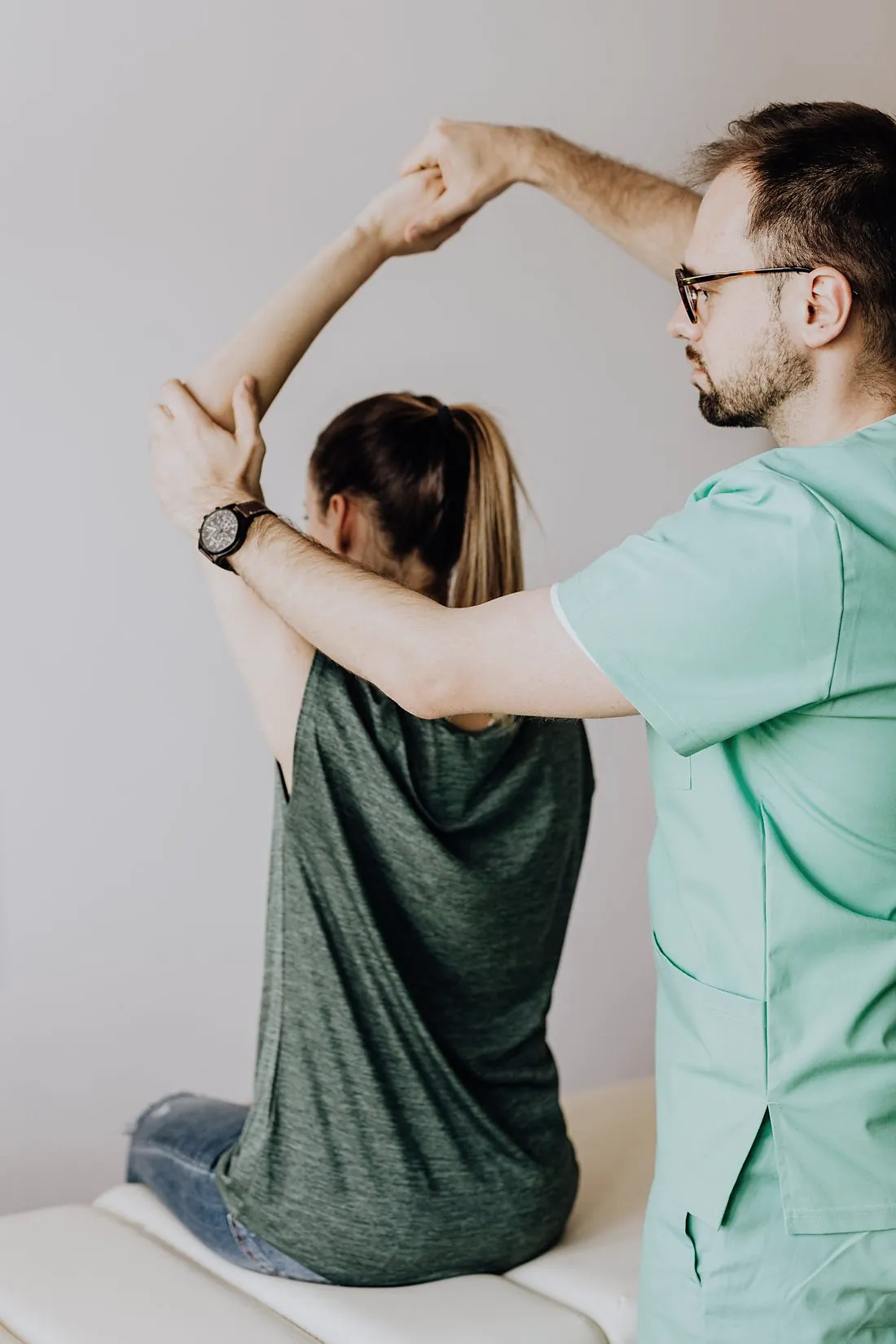
A physiotherapist guiding a seated woman's arm up over her head

Shoulder flexion, typical range 0° to 180°

02

Shoulder pain

Pain lifting the arm, rotator cuff problems and frozen shoulder.

Who it helps
People with pain lifting the arm, rotator cuff problems, frozen shoulder, or a shoulder that has been sore since a fall.
What happens
We check the neck, upper back and shoulder blade as well as the joint itself. Treatment is gentle mobilising, strengthening with bands and weights, and changes to how you sleep and work.
What we measure
How high you can lift the arm forward and to the side, how far it turns, and the strength of the rotator cuff.
Usual course
4 to 8 sessions over 6 to 10 weeks
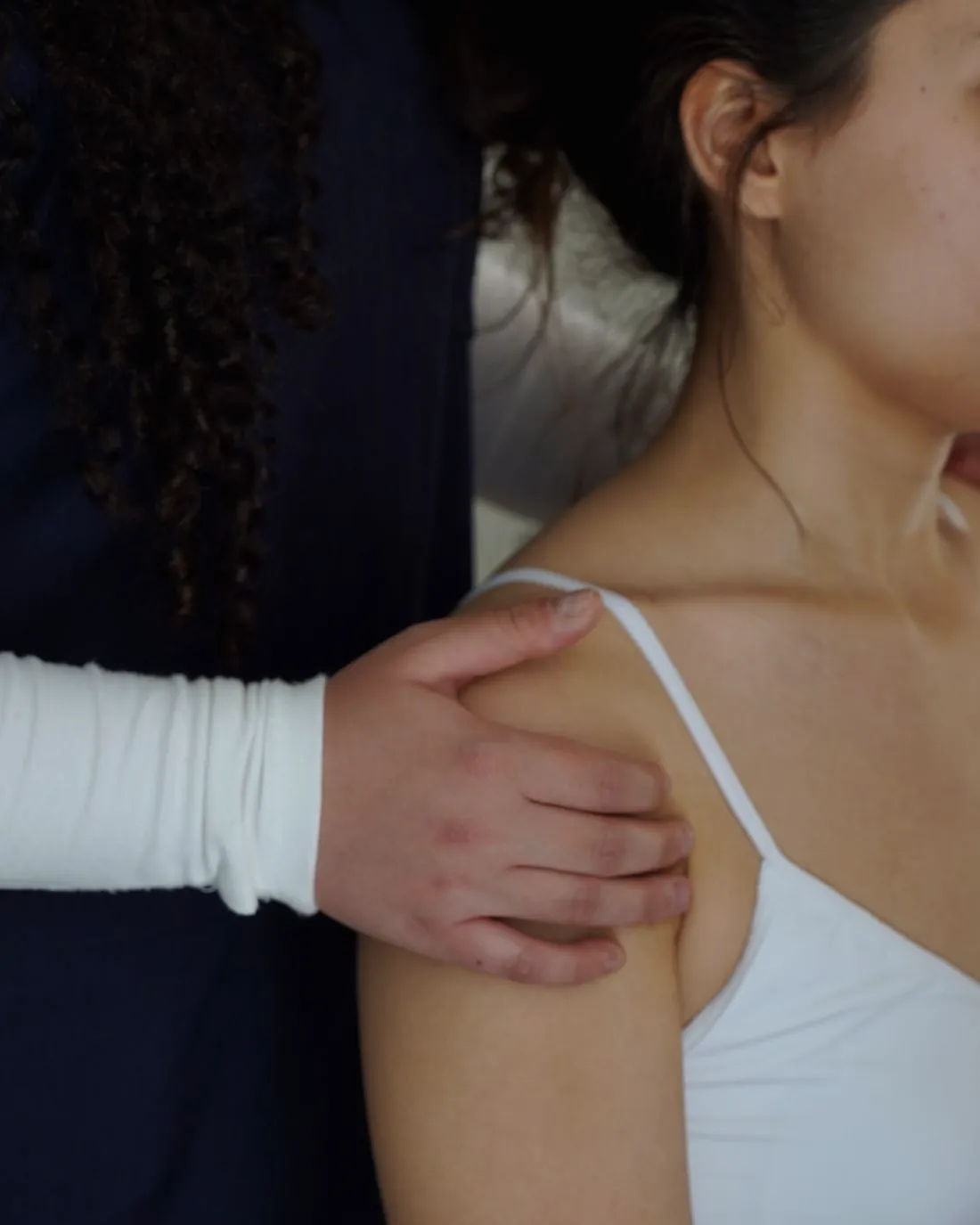
A practitioner's hand resting on a woman's shoulder to feel how it moves
Feeling how the shoulder blade moves as the arm lifts.

Book a first visit

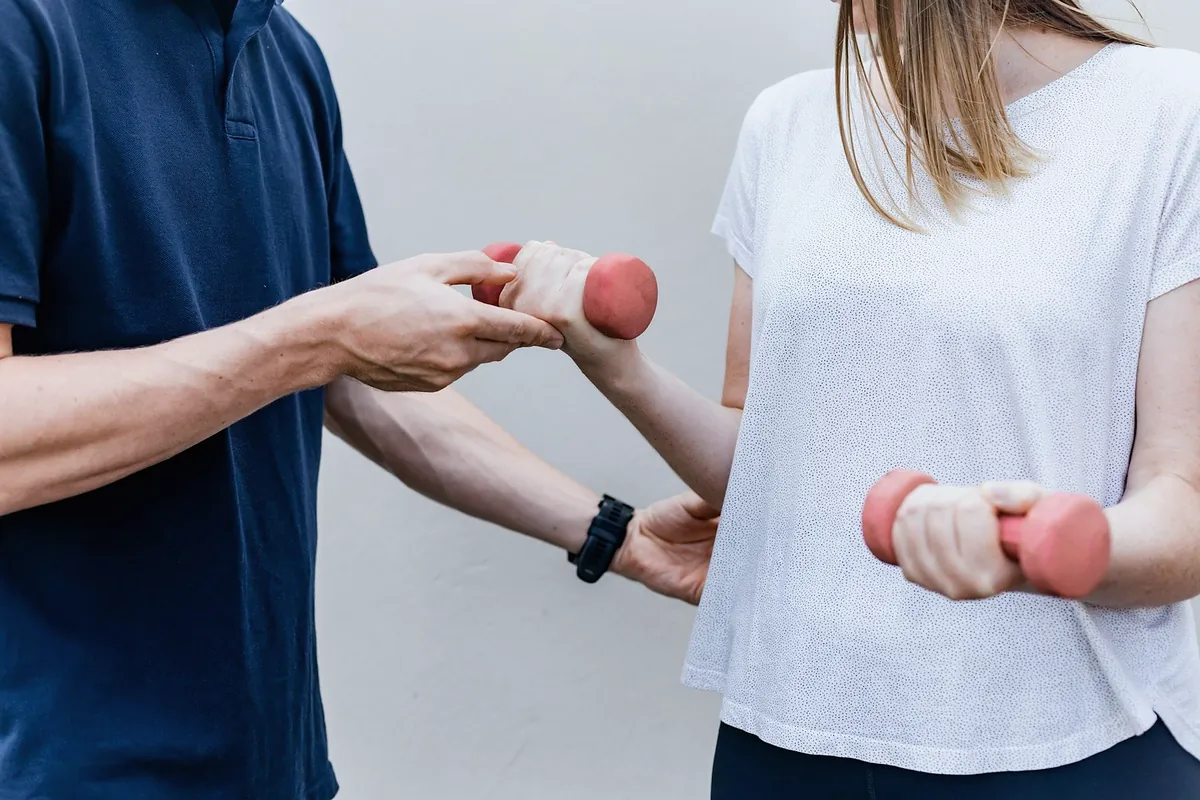
A physiotherapist supporting a woman's elbow as she lifts a small pink dumbbell

Elbow flexion, typical range 0° to 145°

03

Elbow, wrist and hand

Tennis elbow, golfer's elbow, wrist pain and stiffness after a fracture.

Who it helps
People with tennis or golfer's elbow, wrist pain from typing or lifting, and stiffness after a fracture or a cast.
What happens
We load the tendon or joint step by step with grip and light weight exercises, and use taping or a brace for short periods when it helps. Most of the work is done at home with a small dumbbell.
What we measure
Elbow and wrist range, and grip strength in kilograms, compared with the other hand.
Usual course
3 to 6 sessions over 6 to 12 weeks
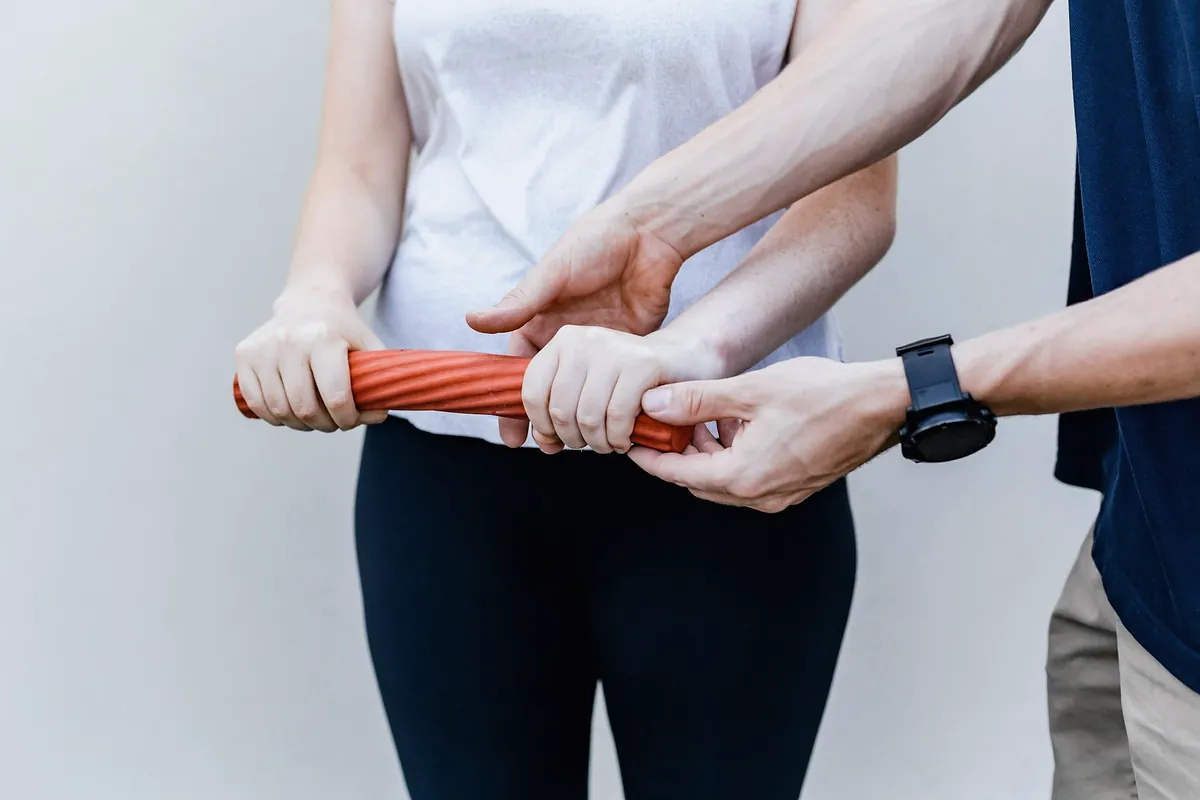
A woman twisting an orange flexible bar while a physiotherapist guides her wrists
A grip exercise with a flexible bar, often used for tennis elbow.

Book a first visit

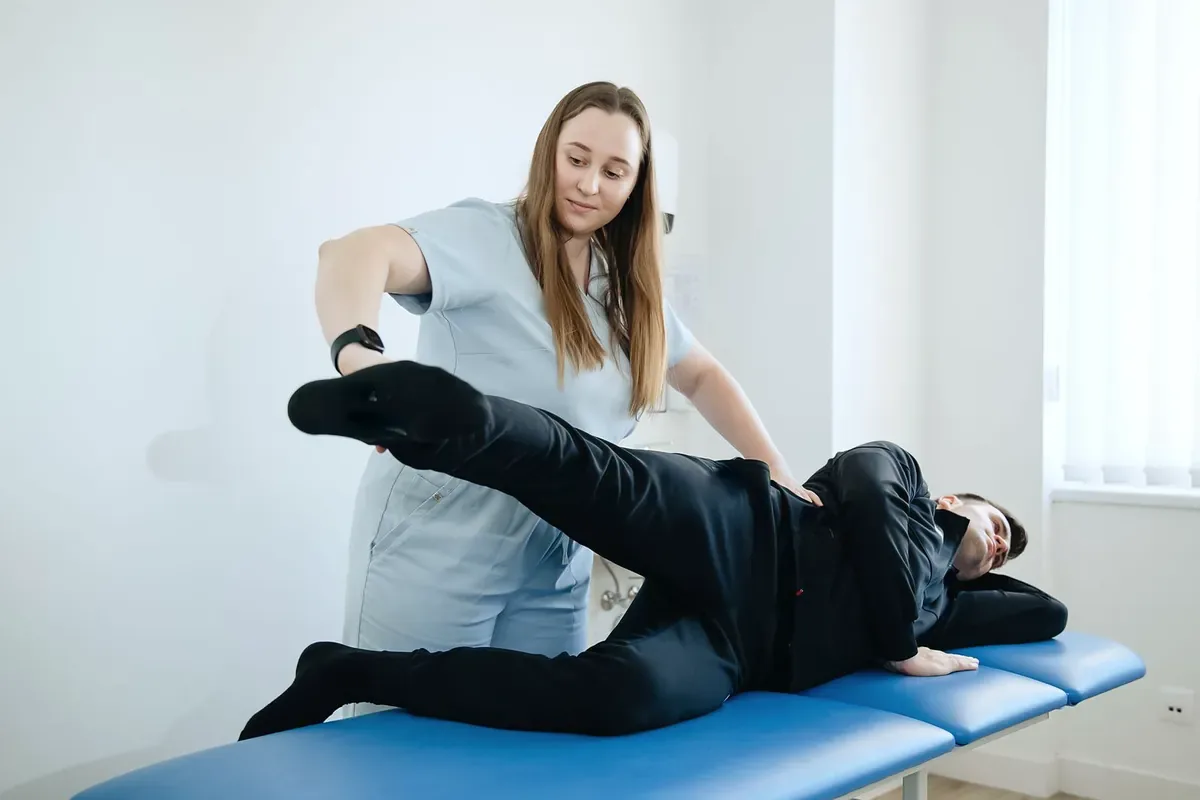
A physiotherapist lifting the top leg of a man lying on his side on a blue treatment table

Hip abduction, typical range 0° to 45°

04

Hip and knee pain

Arthritis, pain on stairs, runner's knee and pain at the side of the hip.

Who it helps
People with knee pain on stairs, arthritis in the hip or knee, pain at the side of the hip at night, or trouble getting up from a chair.
What happens
We test strength, range and how you load the joint. Treatment mixes hands-on work with strengthening for the hip and thigh, and advice on walking, stairs and pacing.
What we measure
Hip and knee range, the strength of the hip and thigh muscles, and how many times you can stand up from a chair in 30 seconds.
Usual course
4 to 8 sessions over 6 to 10 weeks
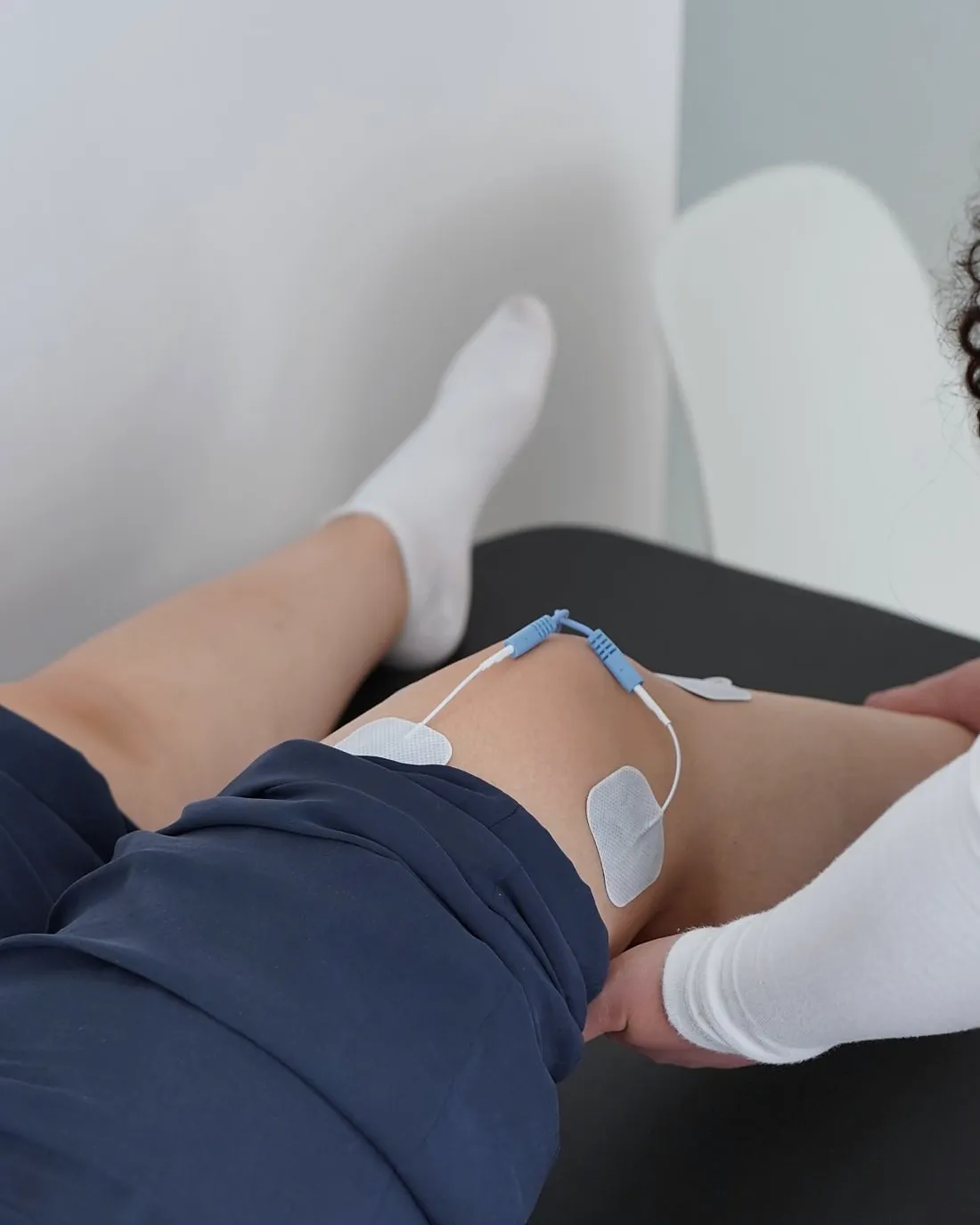
A patient's knee and thigh with electrode pads on the skin, lying on a treatment table
Muscle stimulation pads, used for a few sessions when the thigh muscle is slow to switch on.

Book a first visit

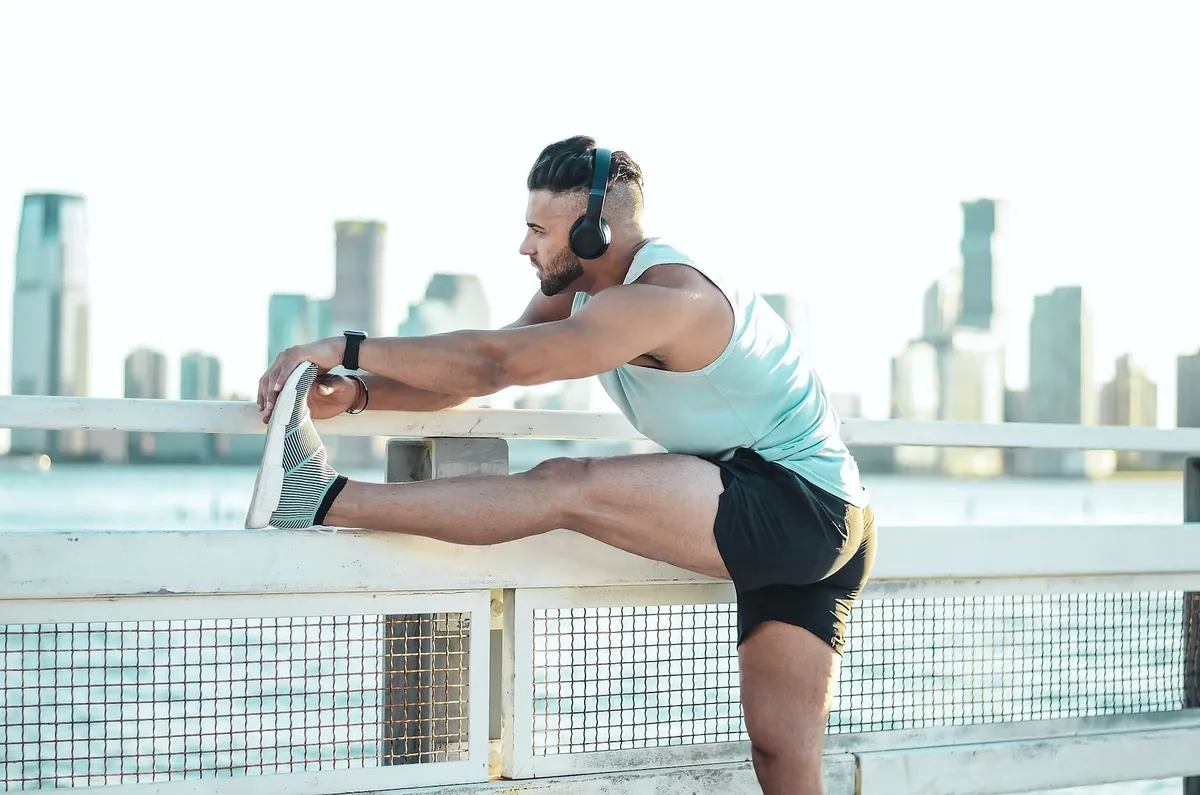
A runner stretching his hamstring with one leg on a railing by the water

Hip flexion, knee straight, typical range 0° to 90°

05

Sports and running injuries

Sprains, strains, tendon pain, and getting back to a race or a season.

Who it helps
Runners, footballers, cyclists, climbers and gym-goers with ankle sprains, hamstring strains, Achilles pain or a niggle that keeps coming back.
What happens
We work out why it happened, calm it down, then rebuild strength and speed in stages. You get a written return plan with checkpoints, so you know when it is safe to run, jump or play again.
What we measure
Range and strength on both sides, hop and balance tests, and the load you can run or lift without pain the next morning.
Usual course
4 to 10 sessions over 4 to 12 weeks
Led by
Dev Raman
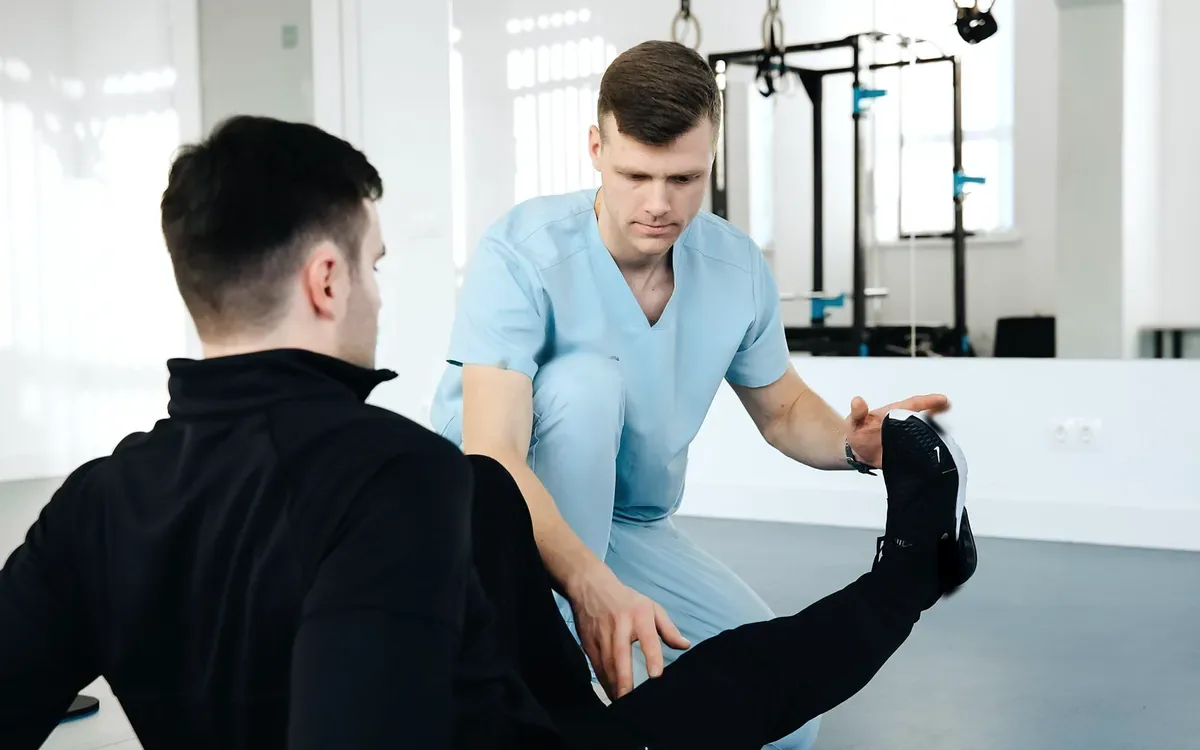
A physiotherapist kneeling beside a seated man and supporting his raised foot
A straight leg test on the studio floor, repeated at each set of measurements.

Book a first visit

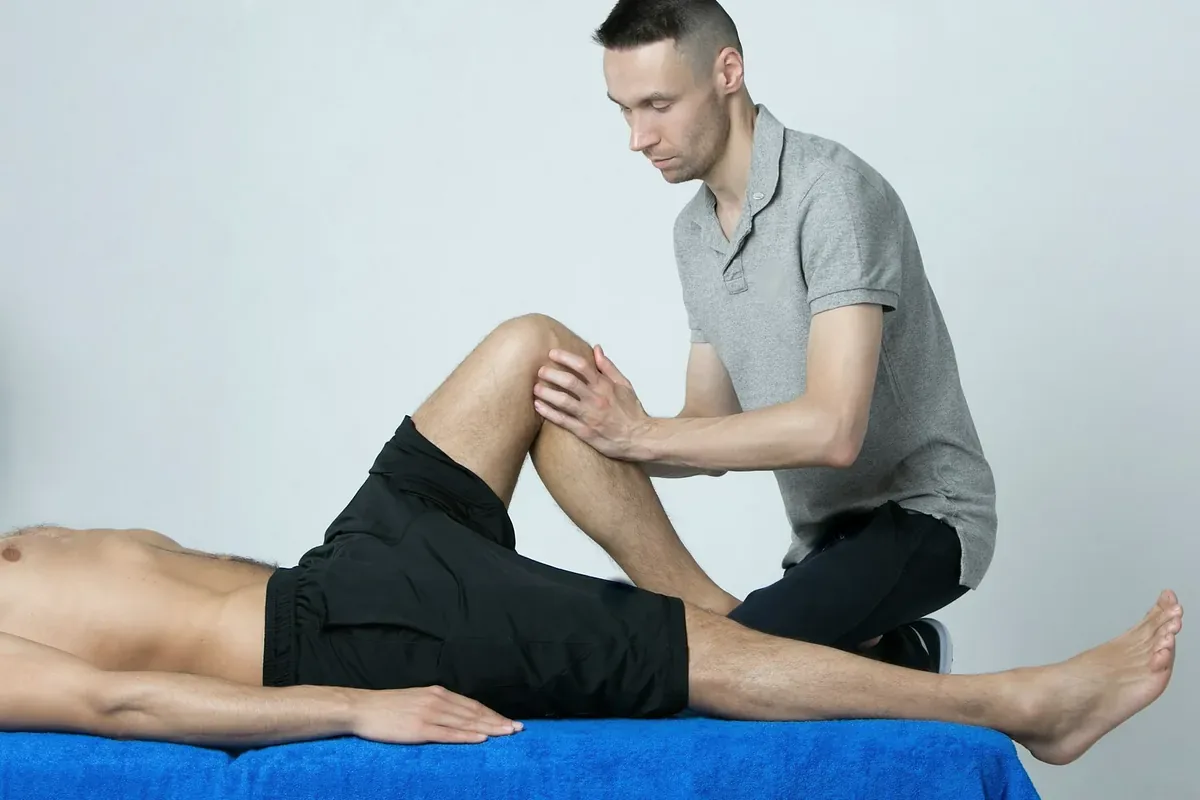
A physiotherapist holding the bent knee of a man lying on a treatment table

Knee flexion, typical range 0° to 135°

06

Rehab after surgery

Knee and hip replacements, ligament repairs and fractures, working from your surgeon's plan.

Who it helps
People recovering from a knee or hip replacement, a ligament repair, shoulder surgery or a fracture.
What happens
We follow your surgeon's protocol. Early visits deal with swelling, walking and safe movement. Later visits rebuild strength until you are back to daily life. We send your surgeon a short report when they ask for one.
What we measure
Joint range at every visit in the first six weeks, walking speed, and strength compared with the other leg or arm.
Usual course
8 to 16 sessions over 8 to 16 weeks
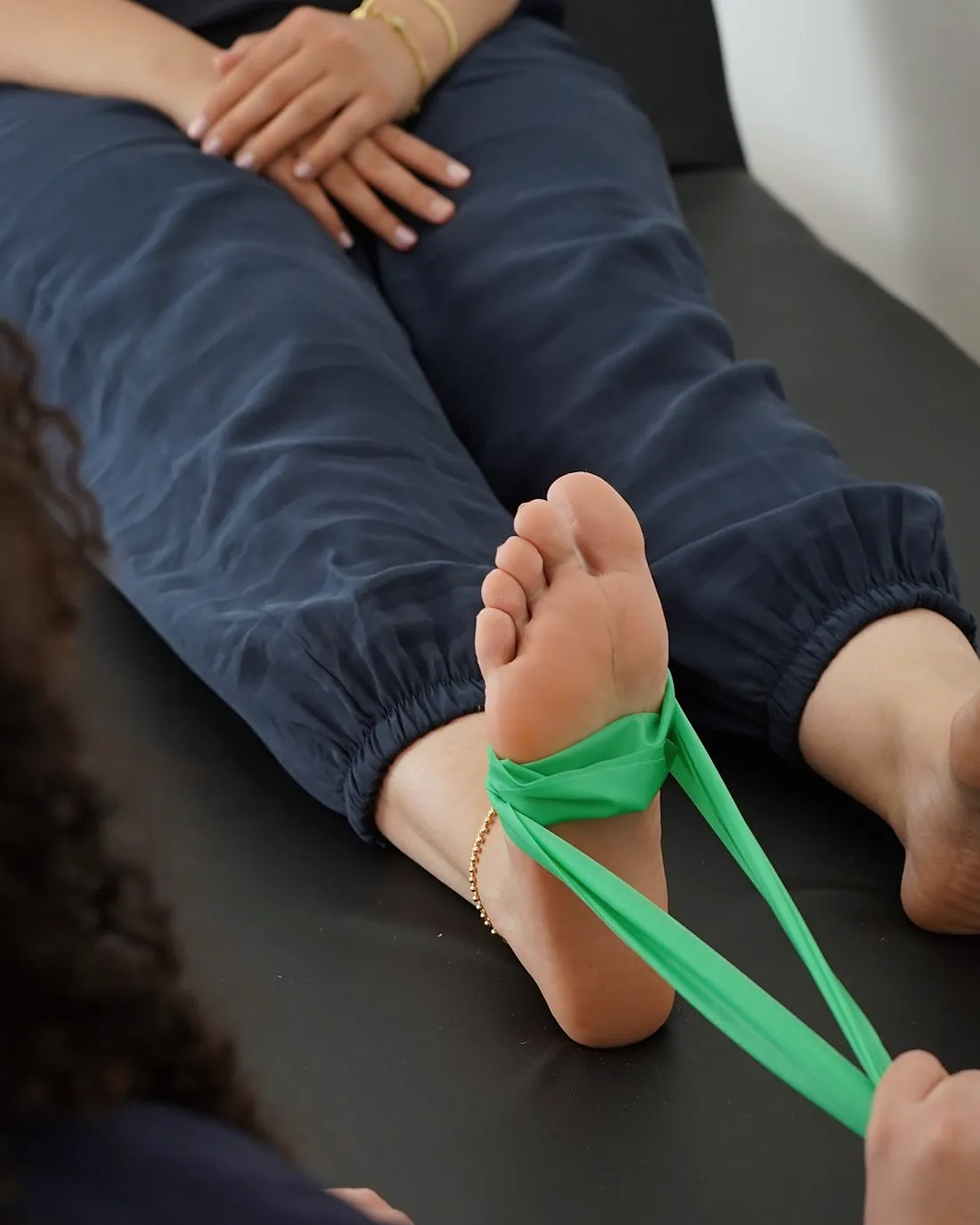
A patient's foot looped in a green resistance band on a treatment table
An ankle exercise with a band, done at home between visits.

Book a first visit

Not sure which treatment fits

Book a first visit and tell us what hurts. We will work out the cause, and if another of our physiotherapists knows the problem better, we book you in with them.

Book a first visit

Example site by Smart BuildBack to services